Write Your Team's Quarterly OKRs with an AI Agent
Hermes orchestrates your 6 AI department heads to produce aligned OKRs in a 45-minute session. Each OKR has an owner, measurable results, and a clear link to your annual strategy. No wishlist — an executable plan.
Writing OKRs manually takes 2 to 3 weeks of meetings. Half of the resulting OKRs are never reviewed because they are vague or immeasurable. Hermes coordinates 6 specialized AI managers (marketing, sales, finance, dev, ESG, legal) to produce aligned quarterly OKRs in 45 minutes — with mapped cross-team dependencies and a monthly review plan included.
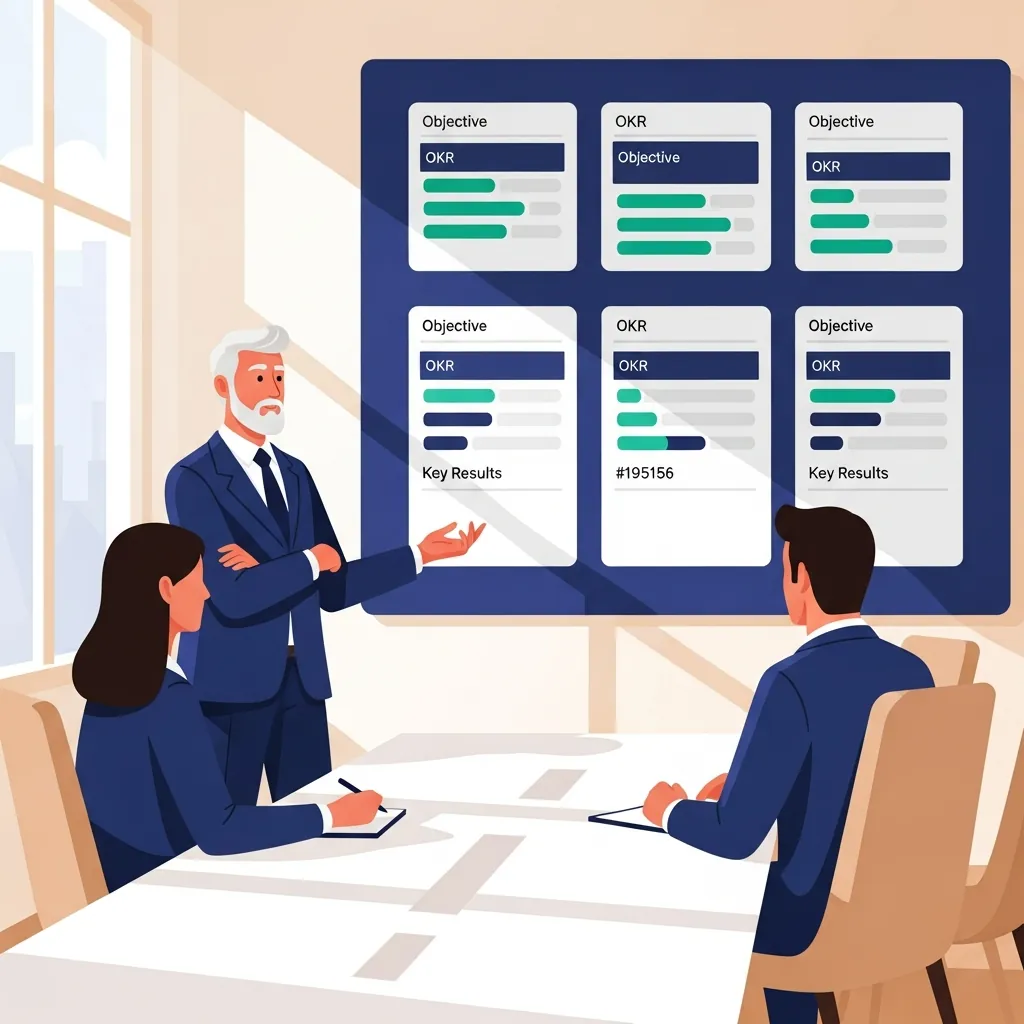
Why 70% of OKRs are Never Reviewed After the Quarter
Quarterly OKRs fail for 4 recurring reasons. First, objectives are written by each team in silo, then 'consolidated' in a plenary meeting — result: they don't align. Second, key results are 'efforts' ('launch the campaign') instead of measurable results ('200 qualified leads'). Third, cross-team dependencies aren't explicit, so no one knows who's blocking whom. Finally, there's no review plan: you write at the start of the quarter, then discover at the end that nothing got done. Hermes addresses these 4 points in the process — not in theory, but in the output.
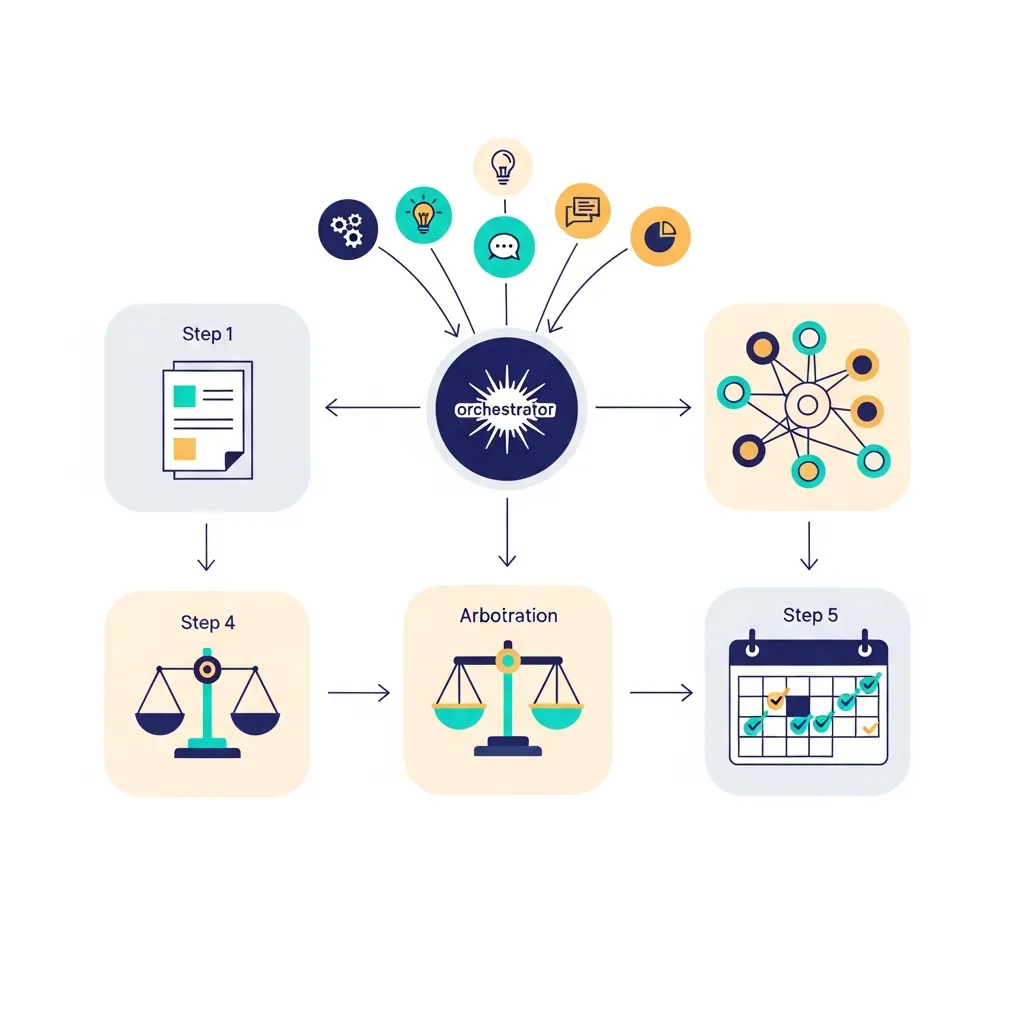
The Hermes 5-Step Process
Hermes orchestrates the 6 AI department heads to produce a complete set of aligned quarterly OKRs. Each OKR goes through this chain before validation.
-
1
Strategy Brief: Hermes consolidates your annual vision, cash constraints, and critical quarterly milestones from your Brain.
-
2
Department Proposals: Each AI manager (Lili, Léa, Garry, Geeky, Emmy, Abby) proposes 2 to 3 strategy-aligned OKRs, with quantified key results.
-
3
Dependency Mapping: Hermes identifies cross-team dependencies ('sales needs marketing's landing page to hit KR2').
-
4
Arbitration & Tightening: Hermes arbitrates conflicts, removes weak OKRs, and keeps only 5 to 7 quarterly OKRs total — not 25.
-
5
Review Plan: Hermes sets the monthly check-in schedule, alert thresholds ('if KR1 < 40% mid-quarter, escalate'), and the quarterly review grid.
What You Get
5 to 7 Quarterly OKRs
No more — each OKR has 3 to 5 quantified, measurable key results
Dependency Map
Cross-team dependency diagram to identify bottlenecks
Review Calendar
Monthly check-ins with alert thresholds and quarterly grid
Named Owners
Each KR has a single human owner — no diluted responsibility
Notion / Linear / Jira Format
Export ready to paste into your favorite management tool
Communication Plan
Internal sharing doc to align the whole team in 1 meeting
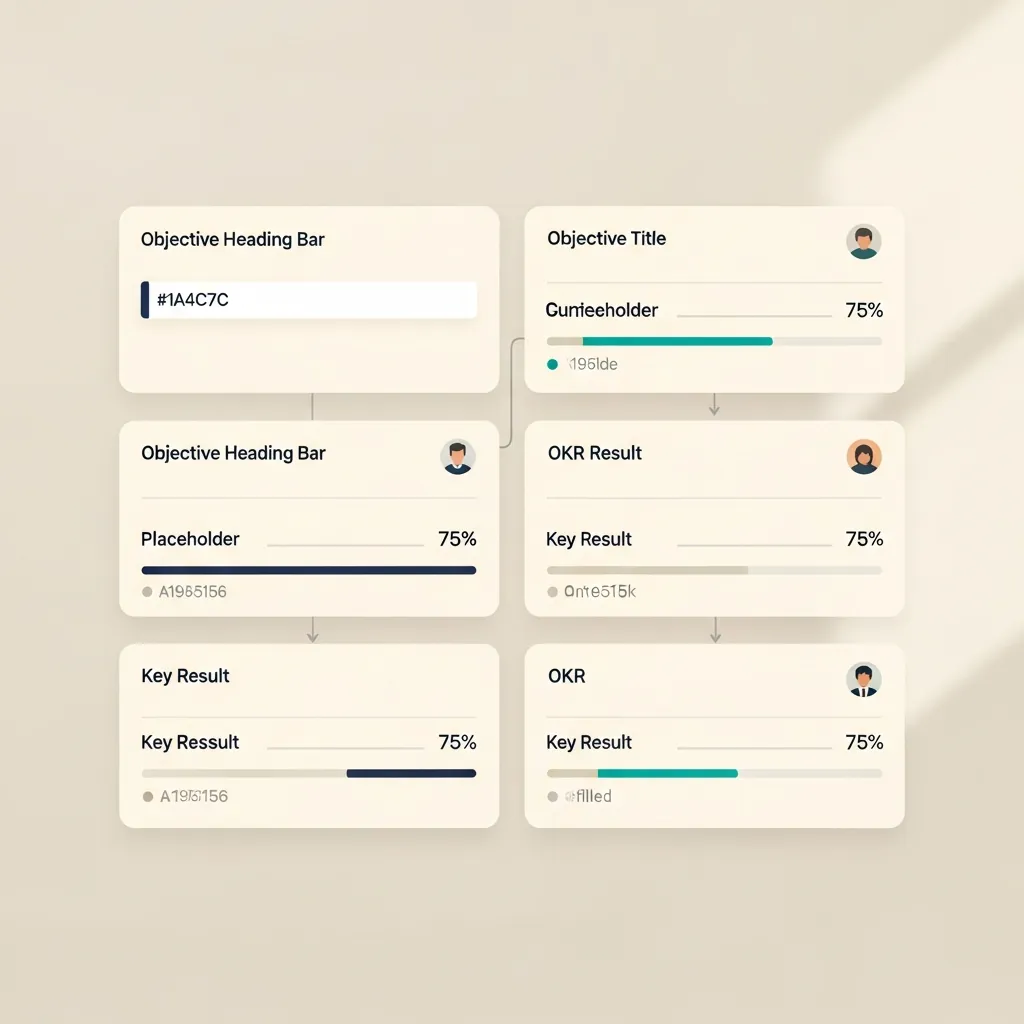
The Team Driven by Hermes (6 Department Heads)


Included from Startup — 69€/mois
OKRs available from Startup plan. Team plan at 199€/month for assisted monthly reviews.
See all plansFrequently asked questions
Can Hermes also drive monthly check-ins and quarterly reviews?
How does Hermes adapt OKRs to my team's size?
What happens if my AI managers propose contradictory OKRs?
Does Hermes use my real data or write generic OKRs?
Do my strategic data remain confidential?
First Set of Quarterly OKRs in 45 Minutes
Try on the Startup plan at 69€/month, no commitment.
Write My OKRs